

Project-based teaching
In addition to regular classes, we conduct project-based classes that involve external associates and often move classes from the premises of the Academy of Fine Arts. In this way, students get an insight into the broader context of artistic work, specific professional practices and opportunities for cooperation. A good example is the Matrice project, which is implemented in cooperation with the Teachers' Department, and there is also a specific form of project-based field teaching that takes place in Grožnjan.
In addition to project teaching, the Department of Graphic Arts also carries out artistic research projects led by professors at the department.
Currently, a four-year NPOO project is being implemented, abbreviated as InPRINT, in which several members of the department participate as heads of specialized segments.
Matrices
Project Manager
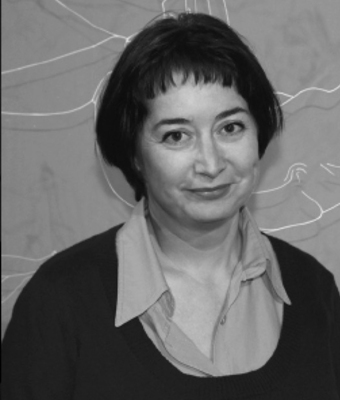
In the academic year 2024/2025, the exhibition Matrices: Body held at the SC Gallery and SC Kiosk from 8. Until May 17, 2025, the 8th thematic cycle of the multi-year educational artistic-research project Matrices of the Department of Graphic Arts and Teaching was completed. The project is related to the research of the concept of matrix in the expanded field of art, science and technology. Students of the Academy of Fine Arts of the University of Zagreb participated in the project and the exhibition: Ezra Zlatan Baričević, Helena Birin, Ljubica Golubić, Sara Kudrić Smerke, Nika Lamešić, Kristina Novosel, Paula Palikuča, Vid Pavlić and Mateo Sito; student of the Faculty of Electrical Engineering of the University of Zagreb Luka Horvatić, alumna of the Academy of Dramatic Arts of the University of Zagreb Margareta Sinković and Alumna of the Accademia Dimitri, Verschio (CH) Matilda Fatur.
The 9th annual thematic cycle of the project, Matrices: Happiness began with a central workshop - field teaching that took place from 1 to 6 July 2025 at the Klajn House in Klanjec. The participants of the project are students of the Department of Teaching and Graphic Arts of the Academy of Fine Arts Mihaela Spiegl, Marija Jakupanec, Vid Pavlić, Paula Kepe, Elena Poljuha and Nika Lamešić; student of editing studies at the Academy of Dramatic Arts Nikolina Marušić and alumni of the BA Universidad Autónoma de San Luis Potosí, Mexico, Rogelio Acevedo Medina.
Lecturers, workshop leaders and associates on the project Matrices: Happiness are Assoc. Prof. prof. dr. sc. Dario Bojanjac (FER), doc. dr. sc. Višnja Pentić (Academy of Dramatic Arts), artist Sven Stilinović, associate professor prof. art. Igor Ruf (ALU) and p. sur. Marko Dajak (Academy of Fine Arts). The authors, leaders and mentors of the project are prof. art. Ines Krasić, prof. dr. art. Mirjana Vodopija, doc. art. Iva Ćurić.
On the edge of the forest, by the lake
Participating

"On the Edge of the Forest, by the Lake" is a workshop on acquiring new knowledge and competencies for teaching and professional staff in the field of Graphics, p. associate Marko Dajak and prof. dr. art. Tanja Dabo, and field work for selected students of the 1st year of the undergraduate study of Graphic Arts.
Field work will consist of three segments:
- presentation of the Mokulito technique, which will be held by doc. art. Tihana Karlović,
- mentoring work with students, which will be held by prof. dr. art. Tanja Dabo, and
- execution of woodcuts in the classical and Mokulito technique of all participants, with the professional help of p. associate Marko Dajak, who participates both as a teaching staff and as an artist/author.
The Japanese word Mokulito translates as wood lithography. Mokulito is a lithographic process of making printmaking that uses a wooden plate instead of traditional stone or metal as a matrix/carrier of an artistic representation. The Mokulito technique or Wood Lithography was developed by Professor Seishi Ozaku, in Japan in the 1970s under the name Mokurito. In Japanese, Mokurito is translated as Moku which means wood, while rito is an abbreviation for lithography. In the Western world, the technique has been renamed Mokulito (moku – wood, lito – stone). Mokulito prints are printed on a gravure/thumping press or for lithography, and are made with lithographic inks. The wooden stencil is usually plywood, made of linden, poplar or cherry wood. Mokulito allows free and direct expression on larger formats, without mechanical action on the matrix, so it also enables fast work. In addition to Mokulito, classic woodcuts will be made, printed by hand and on a press, in a circulation of 10 or more copies, i.e. art books that will become an integral part of the Collection of Art Books of the Academy of Fine Arts.
VENUE AND CONDITIONS PROVIDED: The graphic convocation of the Gorski Kotar Sculpture Workshop has its own graphic workshop equipped with 3 graphic presses for intaglio and high printing. The workshop is equipped with all the necessary equipment and tools – work tables, large-sized tread printing rollers, graphic tools and others.
Places of transformation – spaces of the possible
Participating


The project "Places of Transformation – Spaces of the Possible" explores space as potential – places where transformation is not only possible, but necessary. The focus is on those aspects of space and time that go beyond the physical dimension and open up space for internal transformations, new narratives, as well as subtle shifts in the perception of the individual and the community.
The concept of "possible" in this context does not denote a passive aspiration towards the unrealized, but an active state of potential: a state between the real and the imagined, the known and the unknown, what is and what could be. The "possible" is seen as a space of freedom, questioning and opening, while "transformation" is seen as a process that emerges from the encounter with a real place – its sounds, structures, history and everyday life.
As in the previous phases, students will develop diverse interpretations of places as potential spaces of change through artistic research, lectures and fieldwork in Grožnjan and its surroundings. The project examines how artistic practice can generate new meanings and perspectives, and how it can intervene in existing realities – whether through subtle gestures or direct action.
Through the process of creating and sharing experiences, an archive of "possible spaces" will be developed, through which new meanings of places will be formed – not as fixed points, but as living organisms in constant change. The final presentation of the work in Grožnjan will serve as an open dialogue between the participants, the space and the audience, while the second phase of the project will continue in Zagreb through an exhibition and the continuation of the research process.
Field Study Čakovec
Project Manager
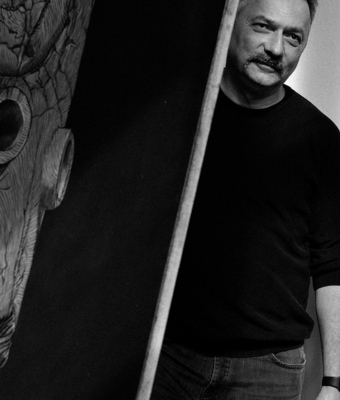
Organizers and associates: City of Čakovec, Art Association Čakovec, red. prof. dr. art. Robert Šimrak, Academy of Fine Arts, University of Zagreb.
Field classes of the Academy of Fine Arts of the University of Zagreb, which are carried out as an extracurricular activity in an organized form in cooperation with the Art Association of Čakovec and the local community; Art workshops and art colony in Čakovec.
The background of the entire project is cultural and social engagement, that is, the need and desire to complete life in the city of Čakovec with creative workshops, raising awareness of different types and techniques of artistic expression, cultural heritage and heritage, and professional development of students for their future title of Master of Graphics and workshop activities:
- improving the system of student practice in study programs and involving students in professional work.
- support for lifelong learning activities. Organization and implementation of extracurricular activities for students and other participants
- upgrading existing knowledge and skills, training teachers and students of the city of Čakovec, in new techniques that complement the school curriculum.
The program of field classes Čakovec will also include the holding of an exhibition of selected student works, created at art workshops and an art colony in which students of the Academy of Fine Arts participated.
How to design a souvenir?
Project Manager
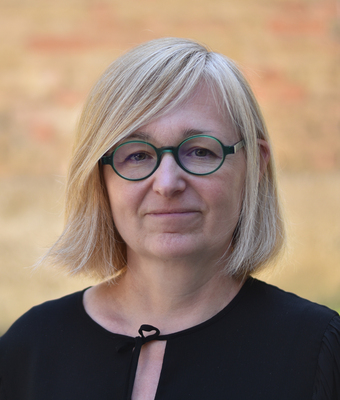
Venue of the relocated classes: Vladimir Nazor Library and Reading Room
Organizers and partners: Vladimir Nazor Library, Matica hrvatska and Institute of Ethnology and Folklore Research
As part of the teaching process, as part of the relocated classes, design workshops are held where students and the local community and professional associations are connected and involved. The workshops are held in the VN Reading Room and Gallery in several terms. In this way, the curriculum is expanded through a dynamic, fast and active form of field practice.
The workshops are based on cooperation with the Vladimir Nazor Library, Matica Hrvatska and the Institute of Ethnology and Folklore Research. The program of cooperation entitled Croatian Mythical Heritage in the Early Middle Ages was initiated by doc. dr. sc. Lidija Bajuk, and is based on the revival, recognition and contemporary aspects of mythical heritage in the Middle Ages in the territory of today's Republic of Croatia.
The program also includes design research and analyses of the possibilities of design as a communication tool in the affirmation and contemporary interpretation of tradition. Design workshops deal with the design and design of new attractive forms of souvenirs and souvenir programs based on traditional motifs, texts and songs. The name of this year's cycle of workshops is: Mythical Symbolism of Dreams - Senjica Senjal, and the first date of the design workshop is in May. The workshops end in November with a joint exhibition in the premises of the Vladimir Nazor Library.