

What's Up - Archive
GEFF Book
The Museum of Contemporary Art is hosting an exhibition dedicated to the "Genre Film Festival" (GEFF), the first experimental film festival in the former Yugoslavia and Eastern Europe, and one of the key places for the formation of structural film, conceptual art and broader avant-garde tendencies in the 1960s. GEFF brought together authors and intellectuals from various fields – film, visual arts, philosophy, criticism, science and design. Leading artists and intellectuals of the period participated in its juries, programs and discussions, including: Dušan Makavejev, Vatroslav Mimica, Aleksandar Saša Petrović, Danilo Pejović, Radoslav Putar, Aleksander Bassin, Josip Vaništa, Vjenceslav Richter and many others." (http://www.msu.hr/dogadanja/geff-63-69-od-antifilma-do-crnog-vala/1847.html)
GEFF was held four times in the period from 1963 to 1970. It was an important gathering place for the production and promotion of new artistic practices.
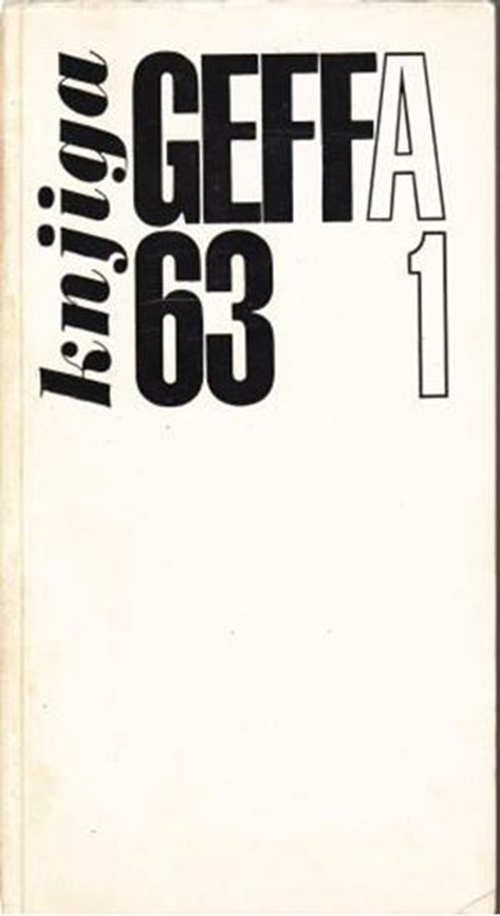
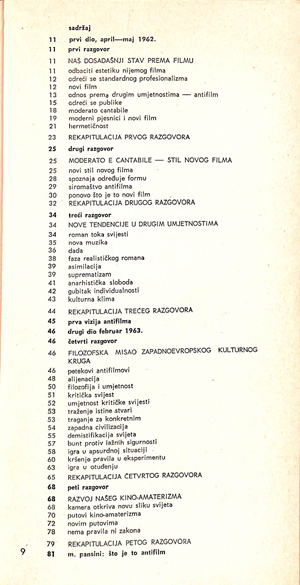
Along with the festival, the Book of GEFF 63/1 was published, which was published in Zagreb in 1967. It was edited by Mihovil Pansini, then one of the leading authors of experimental film, and designed by Mihajlo Arsovski.
Anniversaries of Jerolim Miša
This year, in September, the 135th anniversary of the birth and the 55th anniversary of the death of Jerolim Miša took place. In 1910, he began attending the academy in Zagreb (then the Provisional Higher School of Arts and Crafts), from which he was soon expelled because he criticized his professor in an article. He continued his education in Italy, and later in Austria and Germany. He was a teacher at the Academy of Fine Arts from 1943 until his retirement in 1960.
Miše went through various phases in his artistic expression and in his critical articles. He began in the spirit of symbolism and expressionism, initially focusing on psychological portraits, and often erotic themes. Later, he turned more to the realism of depictions, with a multitude of landscape motifs, mostly from Dalmatia, in which he also sought a kind of "national expression". For a while, he also brought more simplified depictions of rural or urban scenes in the spirit of socialist realist tendencies. Later, he painted a large number of still lifes.
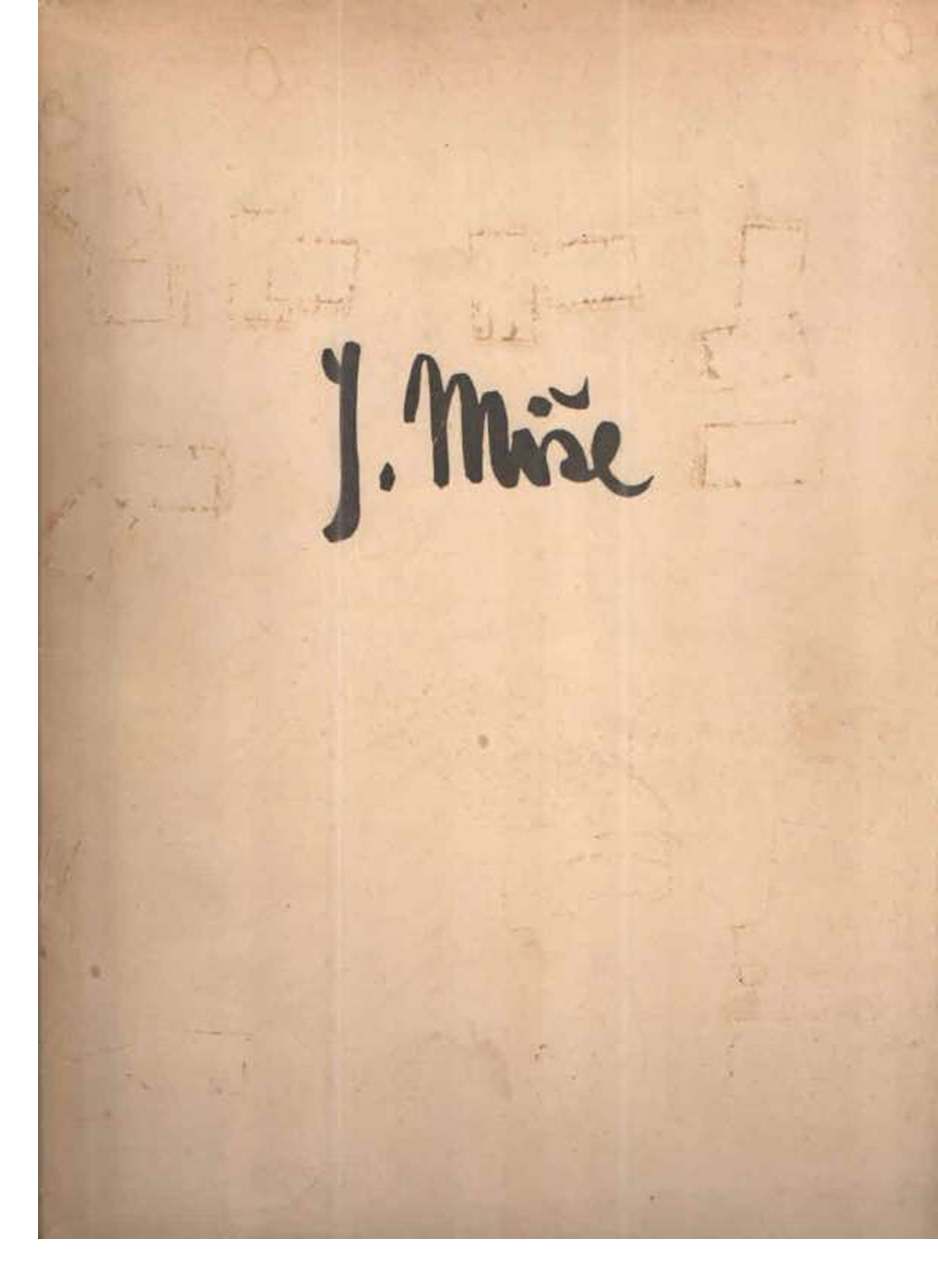
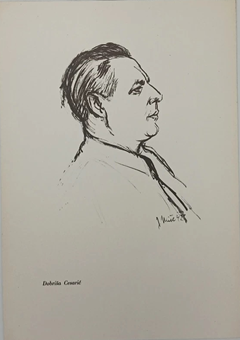
No matter in which style he tries his artistic expression, Miše always proves to be an excellent draughtsman and an excellent portraitist. These two qualities are best expressed in his famous folder "Our Dear Contemporaries", which the Academy of Fine Arts Library has in its collection. It was printed in 1944 and contains 60 portraits of famous authors from different cultural areas, such as: D. Cesarić, Jakov Gotovac, Nikola Šop, D. Tadijanović, Tin Ujević, Joza Kljaković, V. Nazor, Branko Gavella and others.
On the occasion of the exhibition of Vojin Bakić
Vojin Bakić is one of the most important contemporary Croatian sculptors. He graduated from the Academy of Fine Arts and attended a special course with Fran Kršinić. He was very skilled in figurative design, but over time he turned more and more to the exploration of forms and abstract expression. The process ranged from impressionistic surface treatment, through the compression of mass into organic or geometric shapes, to completely abstract forms.
His works therefore encompass very diverse expressions and themes: portraits (Ivan Goran Kovačić), monuments, figures (Bull, Bird), to experimental Light and Leafy Forms. His monuments to the anti-fascist struggle (Bakić himself lost four brothers in the camp), which he realized in figurative expression (monument to Ivan Filipović), abstract design (Dotrščina in Zagreb, Kamenska in Slavonia) or in a complex sculptural and architectural composition (Petrova gora).
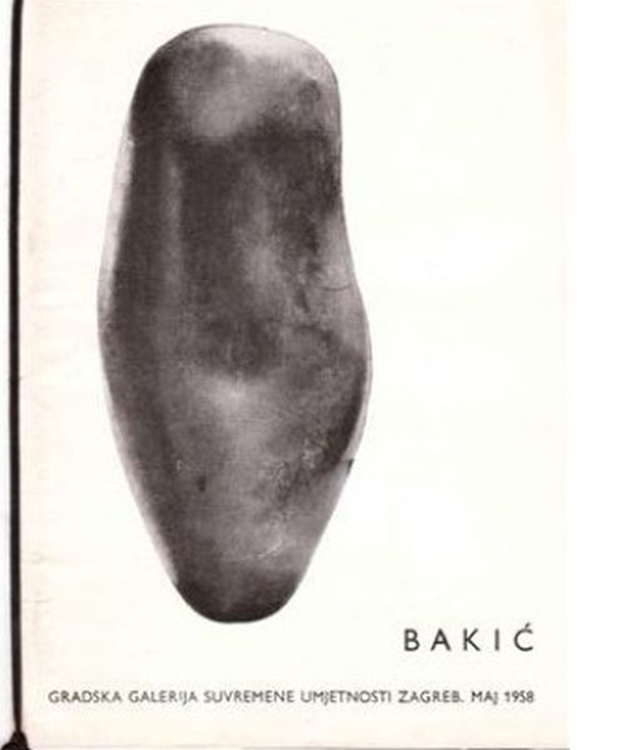
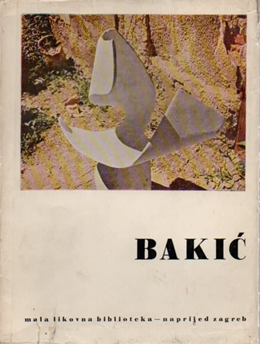
Bakić's first retrospective exhibition was held in 1958 at the City Gallery of Contemporary Art, and presented 45 exhibits. That year, a small-format monograph from the Small Art Library series of the Napred publishing house was published. The booklets were equipped by Ivan Picelj, and the selection of works and the foreword was made by Milan Prelog. The works were recorded by Tošo Dabac.
On the occasion of the exhibition of Miro Vuca in Klovićevi dvori in Zagreb
Miro Vuco, a long-time teacher at the Academy of Fine Arts, is known for his sculptural achievements in the spirit of the aesthetics of art brut, which he adhered to as a member of the "Biafra" group. These are expressive, sometimes tortured characters, as if in some expectation, sometimes threatening, who carry a strong existential message. In the later period, he often turns to a humorous line. Less known is Vuco's drawing and painting opus, which is included in the latest exhibition.
On this occasion, we present the catalogue of the exhibition held in 1994 at the Forum Gallery in Zagreb, which presented Vuco's drawings. The introductory text "In the Beginning Was a Drawing" was written by Zlatko Keser, and the catalogue was graphically edited by Ratko Petrić.

On the occasion of the exhibition "Network of Motovun Meetings" at the Museum of Contemporary Art in Zagreb
The Motovun Art Meetings were held between 1972 and 1984 in Motovun in Istria, which had a significant impact on the revitalization of the city. They brought together many domestic and foreign avant-garde artists, pioneering some interesting topics: Identity, Transformations of Paper, Youth / New Painting, New Sculpture, etc.
We present the catalogue of the exhibition from 1980 that presented the workshop at the Gallery of Contemporary Art in Zagreb. That year, the Meetings were dedicated to young Yugoslav authors, and among the participants we can mention Milivoj Bijelić, Nina Ivančić, Ante Rašić, Damir Sokić, Mauro Stipanov and Tomaž Šalamun. The foreword was written by Marijan Susovski.

With the Festival of Lights: Catalogue of the exhibition "Mouvement 2"
The use and research of light in art especially developed after the Second World War, and it permeates the field of op-art and kinetic art.
On the occasion of the Festival of Light in Zagreb, we present an unusually designed catalogue of the exhibition "Mouvement 2" (Movement 2), which was held in 1964 at the famous Denise René Gallery in Paris. The catalogue consists of 12 connected circular panels that are folded so that they look like one circular booklet. The exhibition was dedicated to optical/light/kinetic art, and the catalogue brings 51 black and white illustrations of the works of the greatest authors in the field. Some of them: Joseph Albers, Alexander Calder, Jean Tinguely, George Rickey, Victor Vasarely, Jesus Rafael Soto, Julio Le Parc and others. Among the exhibitors is our Ivan Picelj.
The first exhibition that Denise René dedicated to the same topic and thus actually promoted this form of contemporary expression was held in 1955 under the same name – "Movement".
The foreword to the presented edition was written by the French writer Jean Cassou, the first director of the Museum of Modern Art in Paris, who significantly increased his collection during Cassou's period thanks to his association with contemporary artists.

On the occasion of Women's Day: II. International Exhibition of Women Artists on the occasion of Women's Day
Women's Day first began to be celebrated in the United States, and the first official event of its kind was held in New York in 1909. As early as the middle of the 19th century, women in America began to protest against poor working conditions and low wages. In 1911, a fire broke out in a textile factory in New York, killing 123 women and girls, prompting further celebrations and demands for women's rights. As the movement spread throughout the 20th century, marches and celebrations in various countries focused on a variety of topics, from voting rights to equal pay or the possibility for women to be employed in "male" jobs, to the prevention of violence against women and, more recently, demands for equality for female soldiers.
In 1978, the United Nations called on all member states to declare March 8 an official international holiday for women's rights and world peace, which was accepted.
On this occasion, we present the catalog of the II. International exhibition of women artists on the occasion of Women's Day, which was held in 1978 at the Piran Gallery. In addition to authors from Yugoslavia, artists from Poland, the Czech Republic, America, Japan and other countries also appeared at the exhibition. From Croatian authors, we can mention Nives Kavurić Kurtović, Marijana Muljević and Đurđena Zaluški.

On the occasion of the exhibition The Smell of Freshly Chopped Wood: A Trace of Carpenter's Art
The Museum of Contemporary Art in Zagreb is hosting the exhibition The Smell of Freshly Chopped Wood, which presents the coexistence of man and nature, i.e. human traces in the landscape and how man's changing of the landscape affects him in return.
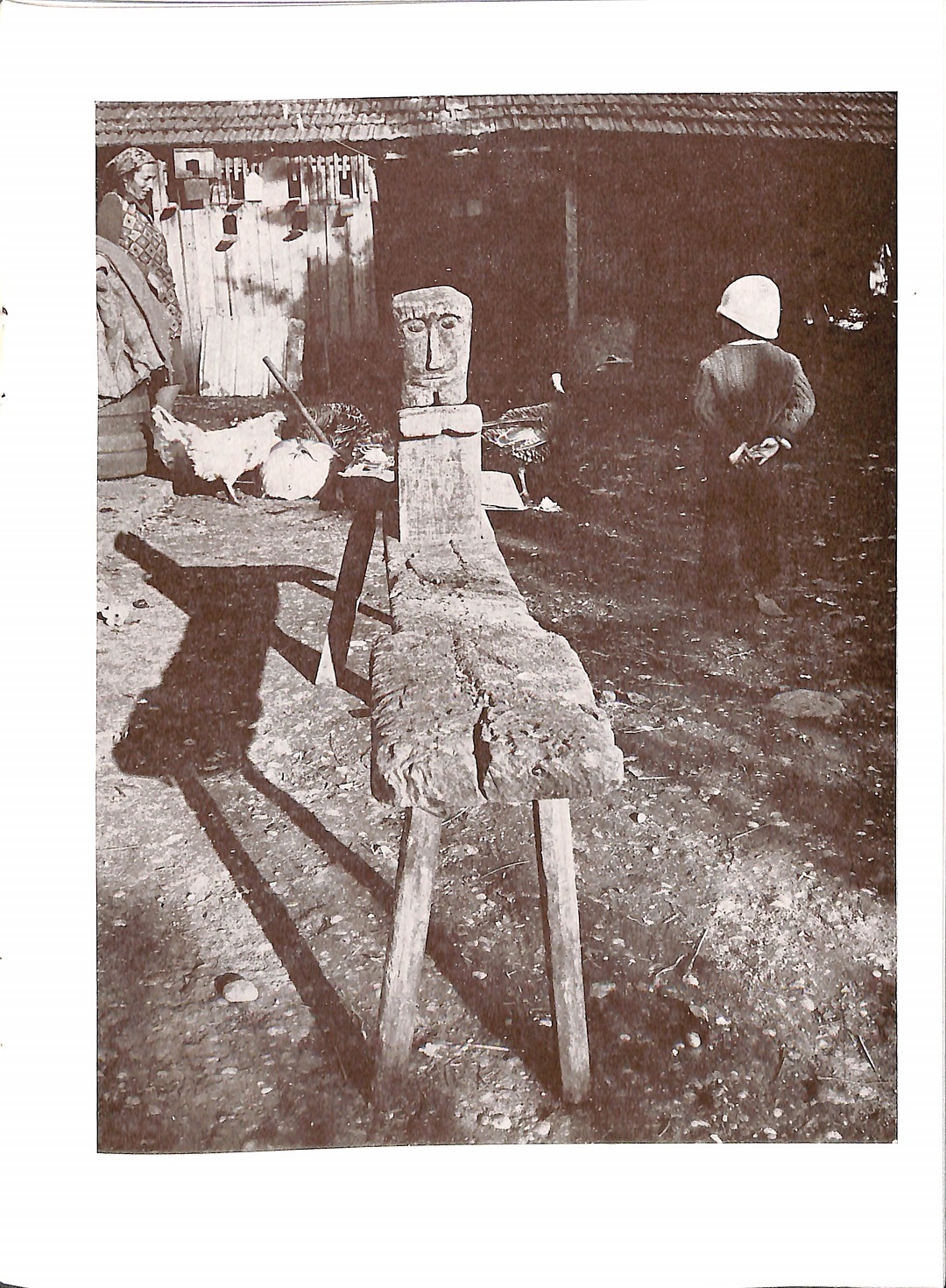
On this occasion, we present the catalogues of two exhibitions. The first was prepared by a long-time professor at the Academy, Želimir Janeš, entitled Sculptural Trace of Carpentry Skills, and was held in 1978 in Sisak. As a master of small plastics, he found in old handmade everyday objects made of wood the harmony of human work, life and environment, and emphasized the sculptural element in these artifacts that are adapted to the human hand.
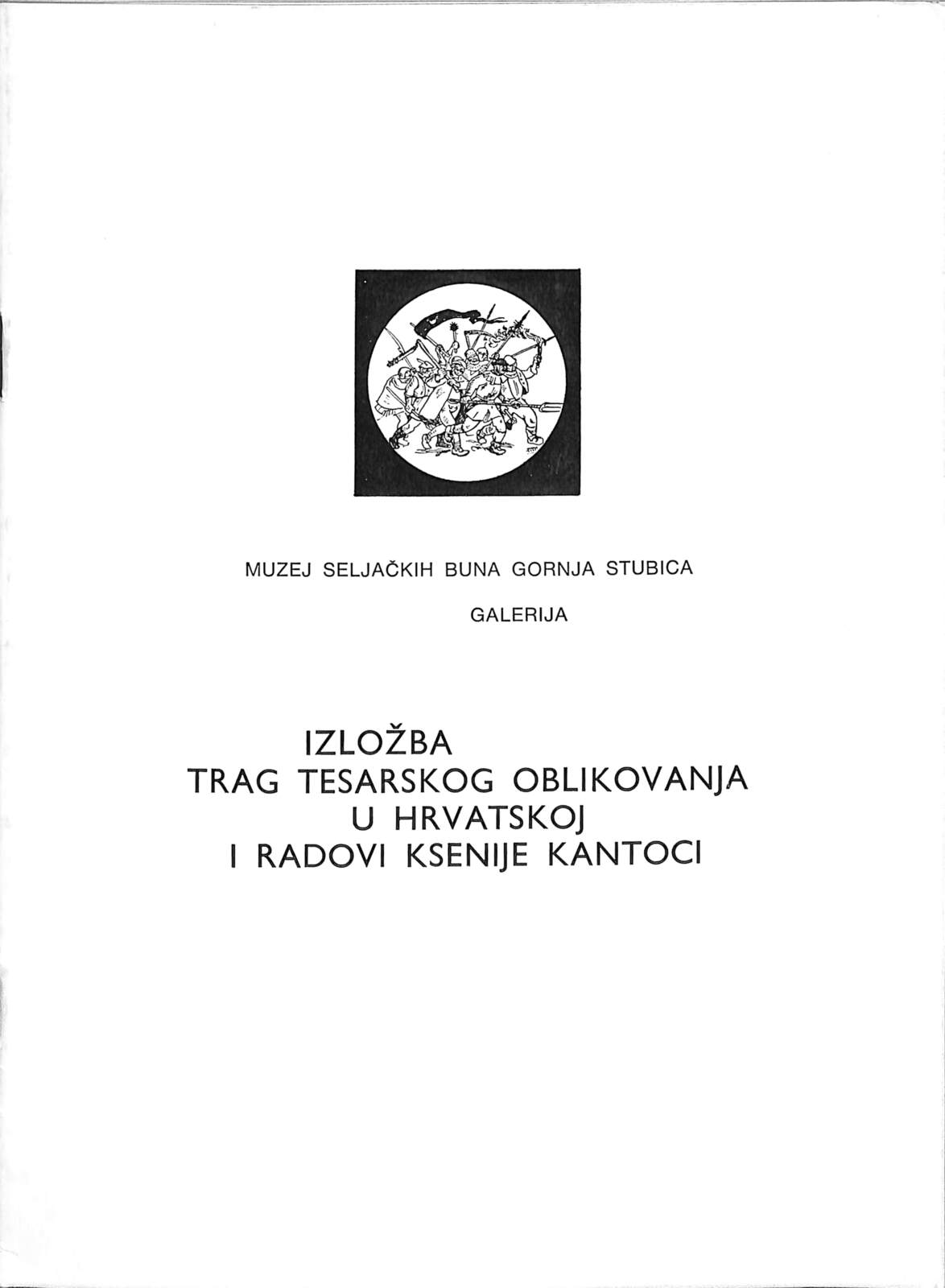
The second exhibition The Trace of Carpentry Design in Croatia and the Works of Ksenija Kantoci was held in 1980 at the Museum of Peasant Revolts in Stubica, and Janeš was also one of the authors. The texts by Josip Depol and Juraj Baldani speak of the essential power of wood as a material, which has been preserved both in anonymous objects and in the works of the great author Ksenija Kantoci.
On the occasion of the exhibitions of A. Srnec and I. Picelj: Light and Movement
During 2024, exhibitions were held by two of our avant-garde artists who were members of the New Tendencies movement. The movement brought together an international group of like-minded artists and five exhibitions were organized in Zagreb in the period from 1961 to 1973. New tendencies developed in various experimental directions, including through the research of light and movement.
In 1976, an exhibition entitled "Licht und Bewegung" was organized in the museum in Gelsenkirchen, which brought together over 30 authors who exhibited kinetic and light objects. Many of them participated in exhibitions in Zagreb in previous years. Unfortunately, there are no luminoplastics by Aleksandar Srnec, who made an original contribution in this area. Gelsenkirchen still has a valuable collection of kinetic and light works.

On the occasion of the exhibition of Ivan Picelj
Ivan Picelj is one of the authors who have significantly determined the trends of contemporary Croatian art. Early on, he opted for geometric abstraction and participated in the founding of the Exat 51 group and the New Tendencies movement. In particular, he advocated the combination of art and industrial design and a new approach to applied art, where he made an exceptional contribution to the field of graphic design. His innovations in design were recognized early on, so in 1965 an exhibition was organized to present this part of Picelj's oeuvre.
The exhibition was held in the Cabinet of Graphics and presented 58 posters and 7 books. Among the reproductions in the catalog is the poster "New Tendencies 2". It is not stated who did the design of the catalog, but probably Picelj himself, and the poster for the exhibition was designed by Picelj and Arsovski.


On the occasion of the 150th anniversary of the birth and 100th anniversary of the death of Viktor Kovačić
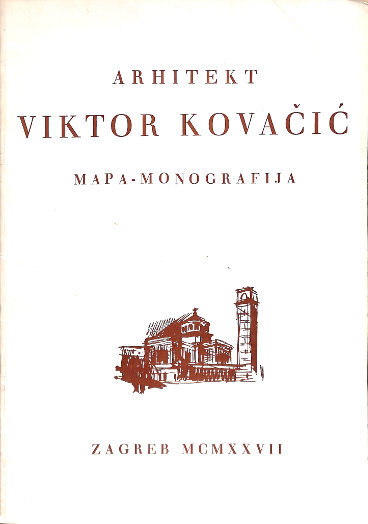
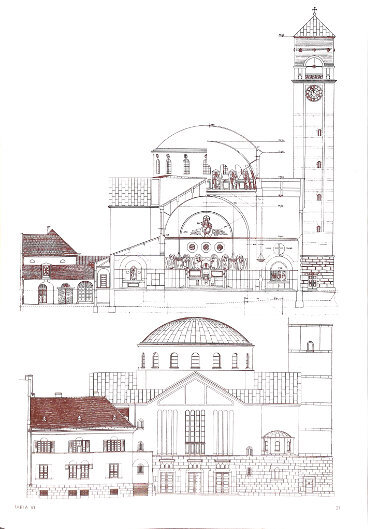
Viktor Kovačić is considered to be the main founder of modern Croatian architecture. After completing his education in Vienna with the prominent representative of modern architecture Otto Wagner and his acquaintance and friendship with the great architect Adolf Loos, he opened his own studio in Zagreb. He published the program text Modern Architecture in the magazine Život, in which he advocated architecture that responds to modern needs and life habits. In 1906, he founded the Club of Croatian Architects. His achievements are well-known architectural markers in the architecture of the Lower Town, such as the Frank House, the Church of St. Blaise and the Palace of the Stock Exchange. He is the author of many residential buildings and private villas (Villa Frangeš in Roko's Park).
In 1974, a copy of the map of his works from 1927 was issued, which was prepared by architect Edo Šen after Kovačić's death.
On the occasion of the exhibition of Aleksandar Srnec
Aleksandar Srnec is a pioneer of experimentation and innovation in contemporary Croatian art. He is one of the founders of the avant-garde group Exat 51, an associate of the Zagreb School of Animated Film, the first author to exhibit mobile sculptures, the so-called luminoplastics, light kinetic ambiences, and a participant in New Tendencies. He experimented in different fields and with different materials, and left his mark in graphics and design.

The library has a catalogue of Aleksandar Srnec's exhibition from 1971, held in the then Gallery of Contemporary Art. The text was written by Boris Kelemen, the design of the catalogue was made by Mihajlo Arsovski, and the photographs by Marija Braut.
The catalogue is interesting because it also includes Srnec's serigraphy, which was printed by Brano Horvat.
On the occasion of the final student exhibition at the Academy of Fine Arts
In 1959, the ULUH Youth Exhibition was held in the Art Pavilion in Zagreb.
The jury consisted of Kosta Angeli Radovani, Vojin Bakić, Marta Ehrlich, Ksenija Kantoci, Edo Kovačević, Antun Mezdjić, Vjekoslav Parać, Oton Postružnik, Frano Šimunović and Kamilo Tompa.
They exhibited 63 artists, many of whom later became teachers at the Academy. Julije Knifer, Vasilije Jordan and Vlado Kristl exhibited with ULUH for the first time, and Josip Vaništa for the second time.
The catalogue was furnished and edited by Marijan Jevšovar, the poster was made by Boris Dogan, and the photographs by Nenad Gattin.

On the occasion of the 37th Youth Salon
In 1968, the first Youth Salon was held in the Art Pavilion in Zagreb. Awards, among others, were given to future teachers of the Academy of Fine Arts: Nives Kavurić Kurtović, Nikola Koydl, Zdravko Tišljar and Marija Ujević.
The exhibition was set up by Boris Dogan, the poster was made by Nikola Koydl, and the catalog was designed by Ratko Petrić.

150th anniversary of the birth of Ivana Brlić Mažuranić
On the occasion of the 150th anniversary of the birth of Ivana Brlić Mažuranić (18/04/1874 – 21/09/1938)
The presented edition of "Tales of Long Ago" was published in 1994 in Sl. Brod on the occasion of the 750th anniversary of the first mention of that place.
The design of the book was made by Mihajlo Arsovski, and it is illustrated with beautiful drawings by students of the elementary school "Ivana Brlić Mažuranić" from Sl. Brod. The book is accompanied by the text "Ivana to children – children to Ivani" by art historian Radovan Ivančević. The project was led by Verica Vukelić.

With the exhibition of Ivan Meštrović in Klovićevi dvori in Zagreb
Catalogue of the exhibition Meštrović – Rački held in the Art Pavilion in Zagreb in 1910
The introductory essay Chords, dedicated to Meštrović, was written by Ivo Vojnović.

At the 1976 Banquet.
With the exhibition of Prof. Peruško Bogdanić on Hvar - Catalogue of the exhibition in the Gallery "Na Bankete" on Hvar from 1976; P. Bogdanić, K. Kovačić, I. Rončević

Final exhibition in 1949
In addition to the final exhibition of the students of the Academy – Catalogue of the Student Exhibition from 1949.
